
NGN design outsourcing-consultancy
Carriers and Service Providers around the world are being increasingly pressured to provide new services and increase their revenues while reducing costs. Their main goal in this tough market is to continue being attractive and competitive service-providers, while managing to cope with changing regulations and new, non-traditional entrants into the marketplace.According to market researches and analysts, we can anticipate that world-wide market revenue will increase dramatically in the next years. Those carriers, Operators and service-providers (SP), however, who do not adapt to the NGN (next generation network) concept and who will not be fully IP enabled, will not grow. This is an obstacle which may become a survival issue for certain Carriers, Operators, SPs and consequently telecommunications equipment vendors.
Communications ARPU
Group
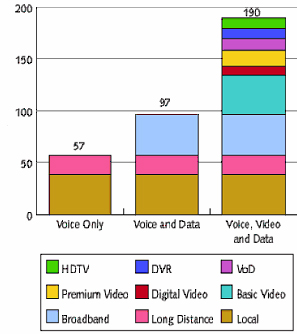
As carriers migrate to NGN, reducing their costs and improving their ability to support high bandwidth-intensive services with guaranteed SLAs, the producers of telecommunication equipment are met by several substantial challenges and needs.
It has been found that new bundled services (Triple & Quadruple Play) both increase ARPU (Average Revenue Per User) for the SP and provide them with a competitive advantage.
With over twenty years’ experience in the field of design of network access equipment, Vedas can assist both telecom equipment designers-producers and operators to define and implement successful access strategies for NGNs, areas in which we can help including:
- Filling the need for detailed knowledge about the NGN concept and standards
- Analyzing and then defining the required NGN topology to comply with both short and long-term needs
- Advising on the design, planning and implementation of new NGN-compliant Open Access Networks, using both fixed-line and optical access technologies
- Implementation of Vedas FPGA SoC solutions to your Hardware platform
A Next-Generation Network (NGN) is the term given to describe a telecommunications packet-based network that handles multiple types of traffic (such as voice, data, and multimedia). It is the convergence of service provider networks that includes the public switched telephone network (PSTN), the data network (the Internet), and, in some instances, the wireless network as well. (Webopedia)
